Loading products…
 Hover to Zoom
Arduino
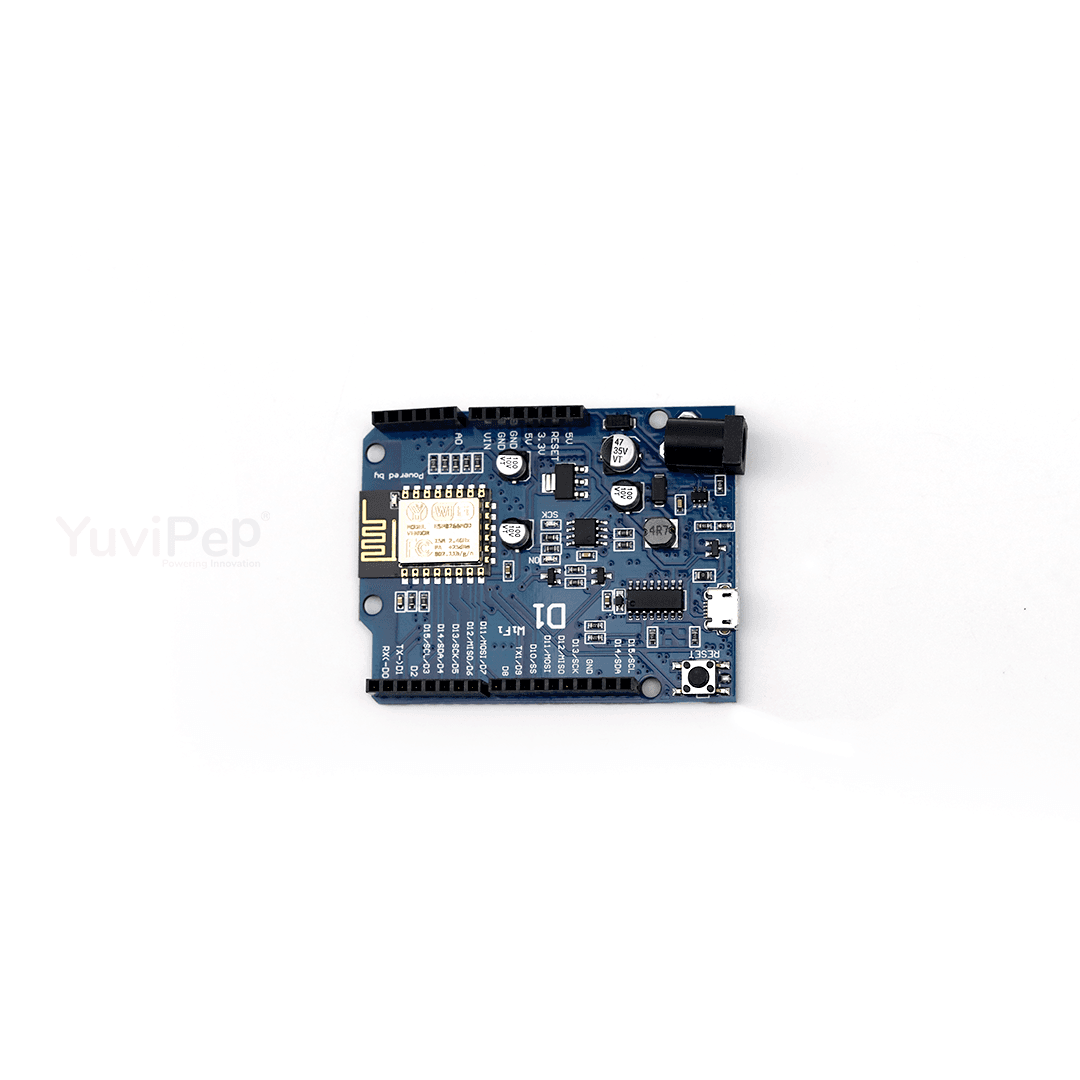
UNO Based Nodemcu ESP8266
- The UNO Based ESP8266 Nodemcu Development Board in the form of the Arduino UNO board format. This board is compatible with the Arduino IDE and with NodeMCU.,,The board is controlled by the ESP8266 chip (a 32-Bit processor) and has a larger flash memory compared to an Arduino Uno. It consists of 11 digital I/O pins and 1 analog (input) pin. the board can be connected using a Micro-B type USB cable.,,The ESP8266 is an extremely popular microcontroller similar to Arduino with built-in WiFi. Typical ESP8266 ESP-12 boards do not have a convenient power or programming connection. It requires you to figure out how to supply 3.3V and more before you can work with them.
₹251.00
Inclusive of all taxes · GST Invoice available
In stock - 100 unitsFree shipping over ₹500
Delivery Option
Enter your pincode for a delivery estimate
- The UNO Based ESP8266 Nodemcu Development Board in the form of the Arduino UNO board format. This board is compatible with the Arduino IDE and with NodeMCU.,,The board is controlled by the ESP8266 chip (a 32-Bit processor) and has a larger flash memory compared to an Arduino Uno. It consists of 11 digital I/O pins and 1 analog (input) pin. the board can be connected using a Micro-B type USB cable.,,The ESP8266 is an extremely popular microcontroller similar to Arduino with built-in WiFi. Typical ESP8266 ESP-12 boards do not have a convenient power or programming connection. It requires you to figure out how to supply 3.3V and more before you can work with them.
Key Features
- Microcontrollers: Arduino Uno (ATmega328P): Handles general-purpose microcontroller tasks, providing 14 digital I/O pins and 6 analog inputs. ESP8266 (ESP-12E module): A standalone WiFi chip capable of handling networking tasks (HTTP, MQTT, etc.) and standalone microcontroller functions. Integrated WiFi: The ESP8266 provides 802.11 b/g/n WiFi connectivity, allowing the board to communicate with web servers, cloud platforms, and local networks. Supports TCP/IP and HTTP for web communication, making it perfect for IoT applications. Communication Bridge: The Uno and ESP8266 communicate via AT commands over serial communication. Switchable modes allow the ESP8266 to work: As a standalone module. As a WiFi interface for the Uno. USB Interface: Equipped with a CH340G USB-to-serial chip, enabling easy programming and serial communication with a computer. I/O Pins: The Uno offers 14 digital pins (6 supporting PWM) and 6 analog inputs. The ESP8266 module adds its own GPIO pins, accessible via specific setups. Power Supply: Can be powered via a USB port or an external power source (7–12V recommended via the DC jack). Voltage regulator provides 5V and 3.3V outputs for powering sensors and modules. Programming: The ATmega328P is programmed using the Arduino IDE via the USB connection. The ESP8266 can be programmed with the Arduino IDE, Lua, or other environments for standalone operation. Switchable Operation: A DIP switch or jumper setting allows users to configure whether the ESP8266 operates independently or in conjunction with the Uno.


Relevant Products


.png&w=3840&q=75)

