Loading products…
 Hover to Zoom
STM
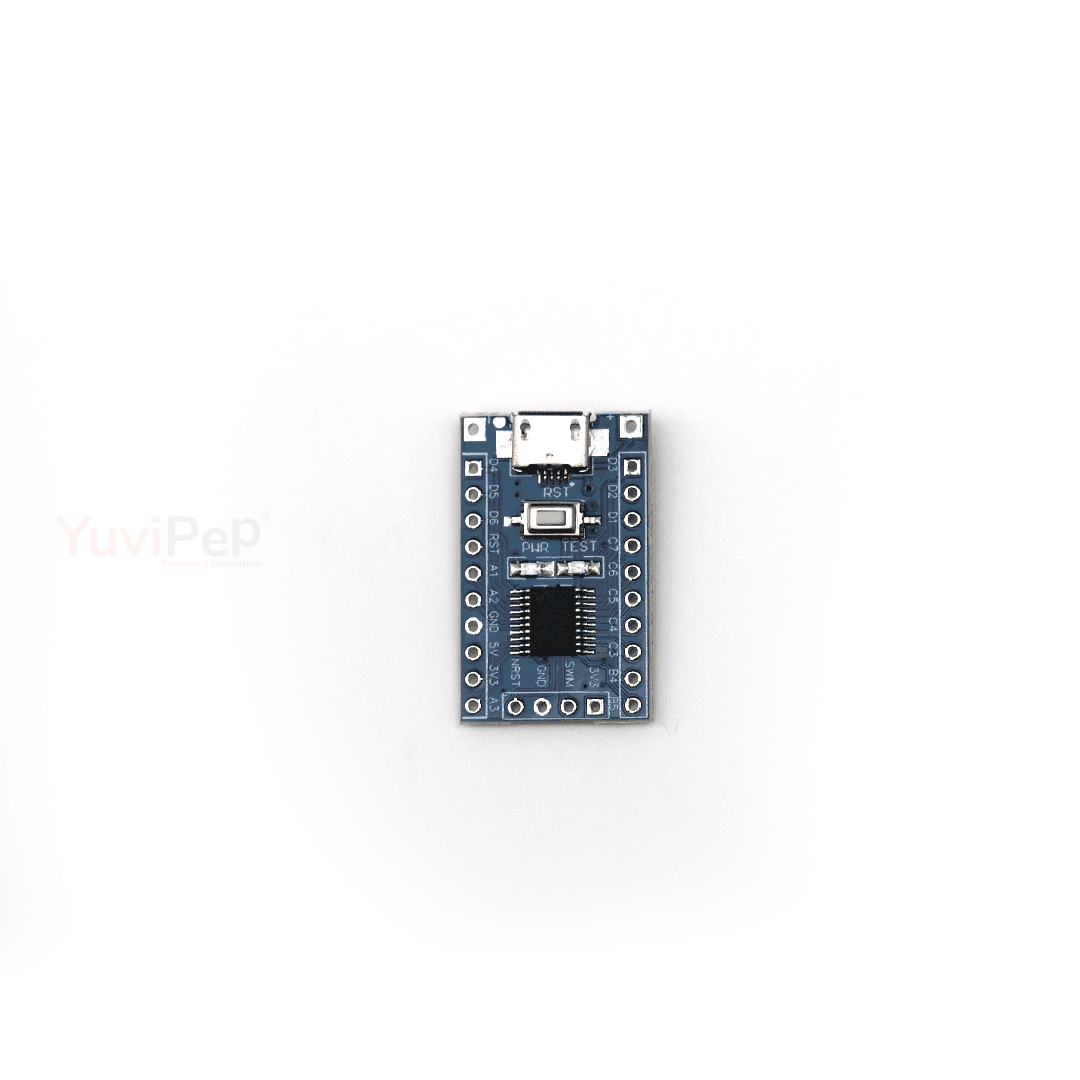
STM8 Development Board (STM8S103F3P6)
- The advantages of the Core Board STM8S103F3P6 STM8 Development Board Minimum System Board is this development board uses the Micro USB to link to the power. The Micro USB line is compatible with Smartphone cable which means we can get the data easily. We do not use the USB MINI cable to link to power because the USB MINI cable has out of style and very difficult to get.,,This STM8S development board draws our attention because of its low price, humanity design and available with complete information.,,You can use 2.54 pin on the board or power supply pad, the pad when using the power supply, input voltage range 4.5V-15V can output to the outside through pin 3.3V!
₹140.00
Inclusive of all taxes · GST Invoice available
In stock - 100 unitsFree shipping over ₹500
Delivery Option
Enter your pincode for a delivery estimate
- The advantages of the Core Board STM8S103F3P6 STM8 Development Board Minimum System Board is this development board uses the Micro USB to link to the power. The Micro USB line is compatible with Smartphone cable which means we can get the data easily. We do not use the USB MINI cable to link to power because the USB MINI cable has out of style and very difficult to get.,,This STM8S development board draws our attention because of its low price, humanity design and available with complete information.,,You can use 2.54 pin on the board or power supply pad, the pad when using the power supply, input voltage range 4.5V-15V can output to the outside through pin 3.3V!
Key Features
- Microcontroller: STM8S103F3P6 MCU: Core: STM8 8-bit architecture. Clock Speed: Up to 16 MHz. Flash Memory: 8 KB for program storage. RAM: 1 KB for runtime operations. EEPROM: 640 bytes for non-volatile storage. I/O and Peripherals: 19 GPIO pins: Can be configured as digital I/O, PWM, or serial communication interfaces. Timers: Multiple timers, including advanced 16-bit timers for PWM generation and precise timing operations. Analog Inputs: 5 channels with a 10-bit ADC for analog signal reading. Communication interfaces: UART: Serial communication for interfacing with peripherals. I2C: For connecting to sensors or external devices. SPI: High-speed data communication. Form Factor and Design: Compact PCB design with 2.54 mm pin headers for breadboard compatibility. Dimensions: ~35 mm x 15 mm. Integrated onboard reset button for easy debugging. Power Supply: Operates on 3.3V or 5V, with onboard voltage regulator. Can be powered via an external source or through a USB programmer (e.g., ST-Link). Programming and Debugging: Programmed using ST-Link V2 or similar programmers/debuggers. Compatible with STVD (ST Visual Develop) or IAR Embedded Workbench development environments. Supports C programming using SDCC (Small Device C Compiler) or proprietary ST toolchains. Other Features: Integrated power LED for board status. Onboard oscillator for stable clock signal.
Frequently Bought Together

(1).png&w=3840&q=75)
Relevant Products


